Key Takeaways
Plastics are synthetic materials built from long chains of polymers, most commonly derived from petrochemicals, with seven main types of plastic serving distinct uses across packaging, automotive, and electronics. Understanding what plastic is made of helps manufacturers choose the right resin for durability, cost, and recyclability. For projects that need precision parts in the right resin, partner with an experienced team for plastic injection in Thailand.
From the water bottle on your desk to the dashboard of your car, plastic is one of the most widely used materials. For manufacturers, designers, and product developers, knowing what plastic is made of or why one type of plastic behaves so differently from another directly shapes part performance, production cost, and long-term sustainability.
This guide breaks down the science of plastics, walks through the seven main categories used in manufacturing, and explains how the right material choice connects to custom mold making and plastic injection in Thailand’s production lines.
What Is Plastic Made Of?
At its core, plastic is a synthetic material built from polymers. Polymers are long, repeating chains of smaller molecules called monomers, linked together through chemical reactions to form a stable, moldable solid.
Most polymers used in everyday products are derived from petrochemicals, specifically from refining crude oil and natural gas. A smaller but growing share comes from bioplastics, which are produced from plant-based feedstocks such as cornstarch, sugarcane, or cellulose.
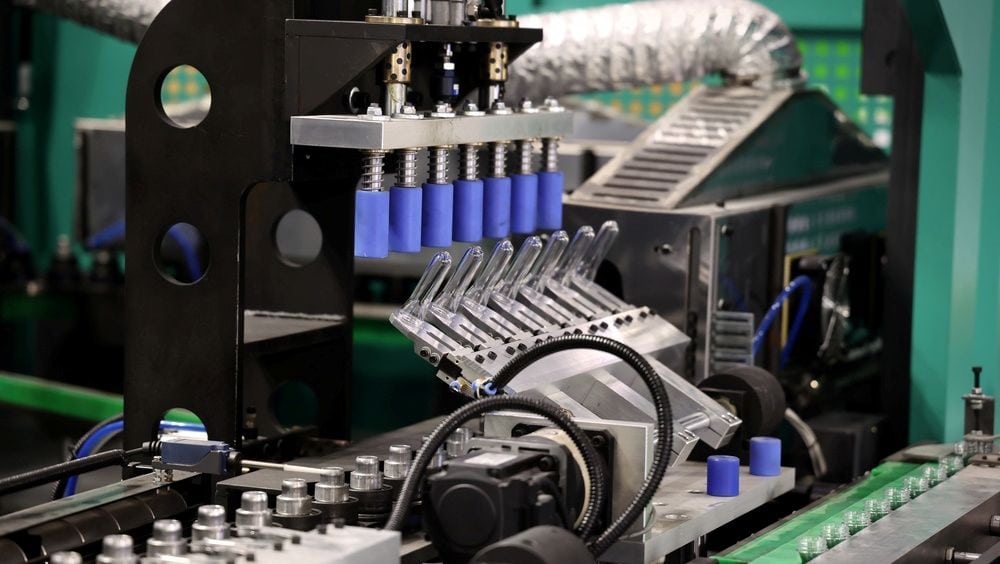
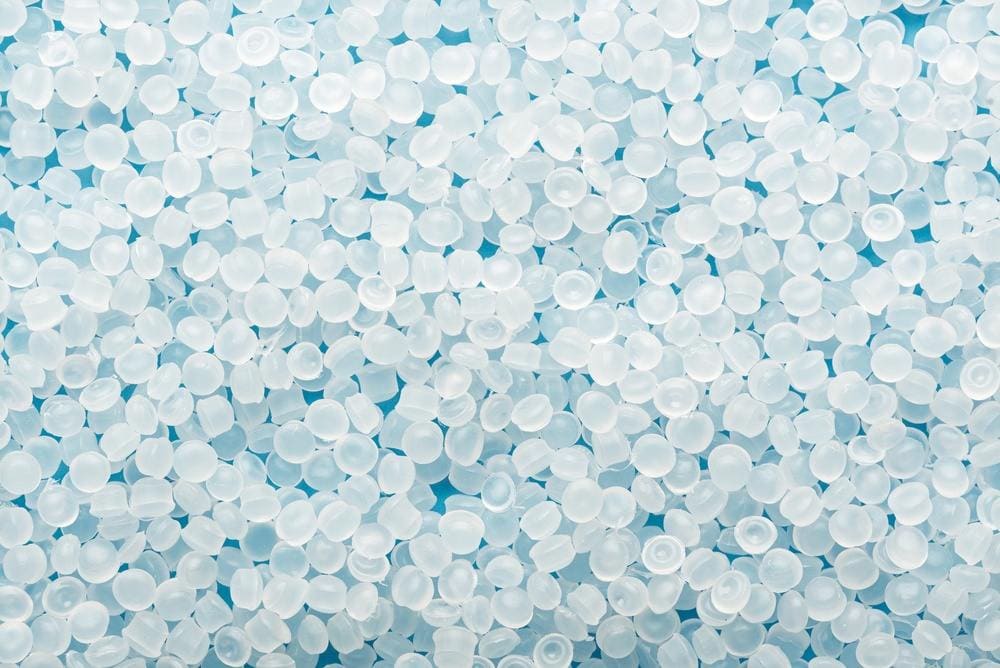
Once a polymer is synthesized, it is processed into pellets, powders, or sheets. Manufacturers then melt and reshape that raw material through processes like injection molding, blow molding, or extrusion. The same base polymer can produce a rigid car bumper or a flexible food wrap, depending on additives, the molding method, and the tool used to shape it.
The 7 Main Types of Plastic
Plastics are grouped into seven categories, each marked by a number on its label. Knowing what are the 7 types of plastic is the starting point for matching material to application.
| Resin Code | Plastic Type | Common Uses | Key Properties |
| 1 | PET / PETE Polyethylene Terephthalate | Beverage bottles, food containers, polyester fibres | Lightweight, transparent, strong, widely recyclable |
| 2 | HDPE High-Density Polyethylene | Milk jugs, detergent bottles, piping, industrial containers | Durable, chemical-resistant, moisture-resistant, easy to mold |
| 3 | PVC Polyvinyl Chloride | Plumbing pipes, window frames, medical tubing, flooring | Strong, versatile, corrosion-resistant, rigid or flexible |
| 4 | LDPE Low-Density Polyethylene | Plastic bags, shrink wrap, squeezable bottles | Flexible, lightweight, low cost, less rigid than HDPE |
| 5 | PP Polypropylene | Food containers, automotive interior parts, bottle caps, textiles | Heat-resistant, tough, resistant to fatigue from repeated flexing |
| 6 | PS Polystyrene | Disposable cutlery, foam packaging, CD cases, insulation | Rigid, lightweight, insulating; brittle in solid form |
| 7 | Other Polycarbonate, Acrylic, Nylon | Eyewear lenses, electronic housings, automotive lighting, safety equipment | High impact resistance, optical clarity, engineering-grade strength |
How Plastic Types Affect Manufacturing
Long before a CNC machine cuts the first block of tool steel, engineers handling plastic injection in Thailand must balance a complex matrix of material behaviors. Five primary variables dictate this selection:
- Mechanical demands: tensile strength, impact resistance, and flexibility under load.
- Thermal behavior: melting point, dimensional stability at operating temperature, and resistance to thermal shock.
- Chemical exposure: contact with oils, solvents, acids, or food-grade environments.
- Aesthetic requirements: transparency, colorability, and surface finish.
- Recyclability: end-of-life recovery and compatibility with closed-loop recycling streams.
The mold itself must then be designed around the chosen resin. Shrinkage rates, gate placement, and cooling channels differ for PET versus PP versus polycarbonate. This is where custom mold making becomes critical: an off-the-shelf tool rarely produces parts that meet tight tolerances across high-volume runs.
Weighing the Environmental Impact of Plastic vs. Convenience
Plastic earns its place in modern industry because it is light, durable, hygienic, and cheap to produce at scale. Those same properties are also what make its environmental footprint so difficult to manage.
Global plastics production more than doubled from 2000 to 2019, and the OECD estimates the use of plastic will nearly triple by 2060. The climate cost is high: the plastics lifecycle generated 1.8 billion tons of CO₂e in 2019, equal to 3.4% of global greenhouse gas emissions.
Despite that, plastics still deliver functional value that alternative materials cannot match at the same weight or cost, particularly in medical devices, food preservation, and automotive lightweighting. However, organizations should balance practicality with sustainable plastic manufacturing.
Actionable Strategies for Sustainable Plastic Production:
- Design for recyclability: use mono-material parts where possible and avoid mixed-resin assemblies that are hard to separate at the end of life.
- Specify resins with established recovery streams: PET, HDPE, and PP have mature recycling infrastructure; PVC and PS do not.
- Increase recycled content: blend post-consumer recycled (PCR) resin where part specs allow, reducing virgin polymer demand.
- Lightweight parts intelligently: use mold flow analysis to thin walls without losing strength, cutting both material use and cycle time.
- Cut scrap at source: in-tool sensors, mold flow simulation, and tight process control reduce defective parts and regrind needs.
- Extend mold life: a precision-built, well-maintained mold produces consistent parts for longer, lowering the embedded carbon per unit.
- Plan for take-back or closed-loop programs: work with customers on reverse logistics for industrial parts, returning regrind to the production line.
Choosing the Right Plastic for Your Project
Picking the right resin starts with the part’s job description. Other practical considerations include production volume, finishing requirements such as painting or plating, and whether the part will be assembled with snap fits, ultrasonic welding, or fasteners.
If your project is still in the concept phase and you are weighing options, working with a partner who handles both custom mold making and plastic injection in Thailand gives you a single line of accountability from drawing to delivered part. Molder Enterprise has been designing and manufacturing precision molds for plastic, rubber, and die-casting applications for over 25 years, with ISO 9001:2015 and IATF 16949 certification supporting every project.
Move from concept to production today. Talk to our engineering team about your part requirements, and we will recommend the right resin, tooling approach, and production plan. Call 034-476-173 or visit https://www.molderenterprise.com/ to start the conversation.
References:
- Plastic | Composition, Uses, Types, & Facts. Retrieved June 5, 2026, from https://www.britannica.com/science/plastic
- Types of Plastics. Retrieved June 5, 2026, from https://www.sciencedirect.com/topics/chemistry/types-of-plastics
- Global Plastics Outlook: Economic Drivers, Environmental Impacts and Policy Options. Retrieved June 5, 2026, from https://www.oecd.org/en/publications/global-plastics-outlook_de747aef-en.html
- Global Plastic Waste Set to Almost Triple by 2060 (OECD, 2022). Retrieved June 5, 2026, from https://www.oecd.org/en/about/news/press-releases/2022/06/global-plastic-waste-set-to-almost-triple-by-2060.html
- Plastic Pollution. Retrieved June 5, 2026, from https://ourworldindata.org/plastic-pollution
- Polymers. Retrieved June 5, 2026, from https://www.americanchemistry.com/industry-groups/plastics
Frequently Asked Questions About What Plastic Is Made Of (FAQs)
Q: What is plastic made of exactly?
A: Plastic is made primarily from polymers, which are long chains of molecules called monomers. Most polymers come from petrochemicals refined from crude oil and natural gas, while a smaller share comes from plant-based bioplastics such as cornstarch or sugarcane derivatives.
Q: What are the 7 types of plastic?
A: The seven recycling categories are PET (1), HDPE (2), PVC (3), LDPE (4), PP (5), PS (6), and Other (7), which covers engineering plastics like polycarbonate, acrylic, and nylon. Each type of plastic has distinct properties suited to specific applications.
Q: Which type of plastic is best for injection molding?
A: It depends on the part. PP and ABS are popular for general consumer goods, polycarbonate suits high-impact applications, and nylon is used for engineering components. A specialist in plastic injection in Thailand can match resin to part requirements.
Q: Is bioplastic the same as regular plastic?
A: Bioplastics are made from renewable feedstocks rather than petroleum, but they still form polymer chains and can be molded the same way. Some bioplastics are biodegradable while others are not, so the environmental benefit depends on the specific resin and disposal pathway.